




The Great Vascory Scam
RM 200 mil Vascory Group Ponzi Scam & Money Laundering

Ranjeet Singh Sidhu and his inner circle did not just cheat investors. They built a deliberate laundering machine using a respectable Malaysian company as the front and an empty Seychelles shell as the black hole - Vascory Limited (Seychelles). The 2021 audited financial statements of Vascory Berhad — signed off by auditors Usha RL & Co on 1 June 2022 and lodged with SSM — are not accounting errors. They are the smoking gun of systematic misappropriation, false accounting, and money laundering on a massive scale.
While over 50 Malaysian investors (individuals and companies) handed over at least RM41.65 million believing they were putting money into a legitimate “Vascory Group” investment with strong Malaysian backing, the cash was channelled through Vascory Berhad’s Malaysian Ringgit-denominated bank accounts straight into the pockets of Ranjeet, his family members and his business associates. Vascory Limited (Seychelles) is a company that never had a bank account, never employed a single staff, and never conducted any real business. It existed only on paper to offer higher “projected yields” of 12% to over 20% while the Malaysian vehicle promised 8% to 16%. Initial dividends were paid to keep the illusion alive. Then the payments stopped. The money had already disappeared into the layering system.
This is not poor governance. This is calculated fraud using Malaysia’s own corporate system against its own people.
THE LURE AND THE LAYERING PIPELINE
Ranjeet Singh Sidhu, as the controlling mind, positioned Vascory Berhad as the respectable Malaysian face. Investors were told they were investing in the “group”. Sales agents — paid fat commissions of 10% to 20% of the capital raised — pushed the story hard. Some even masqueraded as bank staff offering “Securities Commission approved” schemes supposedly backed by insurance guarantees. One document circulated was a Pacific Insurance cover note that listed both Vascory Limited and Vascory Berhad under a single policy — something no legitimate insurer would ever issue. Another submission to the Securities Commission used mismatched letterheads between SCS Global entities, raising serious forgery concerns. (see appended images provided as forwarded by maper malaysia)
The structure was simple but effective. Malaysian investors transferred money into Vascory Berhad’s accounts. The funds were then booked internally as massive “other receivables” or related-party balances owing from the Seychelles shell and sister Ponzi vehicles (3Lyon and Kuber entities). In reality, the Seychelles company was nothing more than Ranjeet’s personal vehicle for siphoning. No shares, no assets, no operations — just a name used to justify higher returns and to create distance from the Malaysian company when things collapsed.
This is classic layering under the Anti-Money Laundering Act. Investor money comes in clean through a licensed-looking Malaysian entity. It gets disguised as legitimate receivables and related-party loans. Then it is extracted through director allowances, fees, and personal drawings. The 2021 accounts show exactly this pattern in cold numbers.
THE SMOKING GUN: RM193.5 MILLION IN UNEXPLAINED “OTHER RECEIVABLES”
Look at Note 6 of the 2021 audited financial statements. “Other receivables” ballooned to RM193,558,077 — up from RM162.8 million the year before. The company’s principal activities were only “investments and providing management services”. There is zero breakdown. Zero explanation. Zero supporting notes. This is not how honest companies account for nearly RM194 million. How can any external auditor sign-off such accounts? Was the auditor in it with Ranjeet and his other perpetrators as well?
At the same time, there was a net RM45,781,870 exposure in related-party balances — including direct exposure to Vascory Limited (Seychelles) itself and to the other Ponzi vehicles 3Lyon and Kuber. Another RM6,462,605 was due from directors personally. The company recorded only a RM3.239 million loss. How do you carry grotesque related-party exposures and director loans while booking such a small loss? You don’t — unless the accounts were being used to create an appearance of substance while the real money was being moved and dissipated.
The Emphasis of Matter in the auditors’ report about dividends declared despite losses is another red flag. Directors who signed these accounts — Tan Sri Syed Yusof Bin Tun Syed Nasir (Chairman), Datuk Manibalan Kutty A/L Ragavan, Dato’ Haji Che Pee Bin Samsudin, Hirofumi Ouchi, and others — breached their duties under Section 213 of the Companies Act 2016. They allowed false or misleading accounts to be filed. They permitted personal drawings while investor funds were being layered offshore. They used the Malaysian company as the respectable front for a Seychelles fraud vehicle.
Vascory Berhad was wound up by court order on 14 August 2025. It failed to publish or lodge any subsequent audited financial statements right up to the winding-up date. That alone is a strict liability offence under the Companies Act. But the real crime is what those 2021 accounts reveal about the years of deception that came before.
THE BOARD OF SHAME AND THE AGENTS WHO FED THE MACHINE
Powerful names gave this scam credibility. Tan Sri Syed Yusof as Chairman. Tan Sri Rashpal as advisor. Datuk Manibalan and Dato’ Che Pee as executive directors. Hirofumi Ouchi as director. These were not naive bystanders. They sat on the board while the accounts were being cooked and while investor money was being pushed into an empty shell. Their titles opened doors to government-linked companies, state agencies, welfare bodies, and even Islamic research institutes — exactly as MaPeR has documented in multiple complaints.
The sales agents were the foot soldiers. They earned massive commissions for bringing in fresh money — the classic Ponzi fuel. Some victims were retirees and small business owners who trusted the “Tan Sri-backed” name and the initial dividend payments. Others were professionals who believed the paperwork looked legitimate because it carried Malaysian company numbers and bank accounts. The agents did not care. They collected their cut and moved on to the next victim.
This was not one-off misconduct. It was a repeatable model. Before 2016, Ranjeet Singh Sidhu and Hirofumi Ouchi had already used the exact same Vascory Limited (Seychelles) shell to cheat Japanese investors. BIB Ltd, who paid €1 million to Vascory Limited for a certain unpaid fictitious shares transaction involving Ranjeet. No shares were ever transferred. BIB Ltd managed to recover €100,000 from Kyowa Kanko Kaihatsu Malaysia Berhad — an associate company — on the direct instructions of Ranjeet and Hirofumi. The remaining €900,000 was never recovered. BIB Ltd filed proceedings in the Kuala Lumpur High Court seeking to lift the corporate veil of Vascory Limited because it refused to disclose its directors and members. A Seychelles court later granted a Norwich Pharmacal order forcing the registered agent to reveal beneficial ownership information. The pattern is identical: use the Seychelles shell to take the money, hide behind nominees and associates in Malaysia, and dare victims to chase you through multiple jurisdictions.
THE COLLAPSE, THE BANKRUPTCY, AND THE ONGOING COVER-UP
By 2025 the walls were closing in. 3Lyon Holdings Berhad and 3Lyon Capital Berhad were wound up by court orders in Shah Alam High Court (October and August 2025 respectively). Vascory Berhad followed on 14 August 2025. Knight Capital Sdn Bhd magically appeared as a creditor for RM11.76 million in the Vascory petition — another layer of laundering that need further scrutiny.

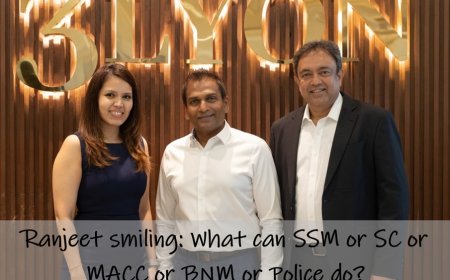
Ranjeet Singh Sidhu himself was declared bankrupt on 10 March 2026. Court records show he failed to comply with a bankruptcy notice. Yet even in collapse, the game continues. Kuber Venture Berhad — the fourth Ponzi vehicle — applied for a judicial management order with a hand-picked nominee. The application was filed after Ranjeet’s bankruptcy. This is the classic final move: put a friendly judicial manager in place to control whatever crumbs remain and create the appearance of “salvage” while blocking real creditors from proper recovery.
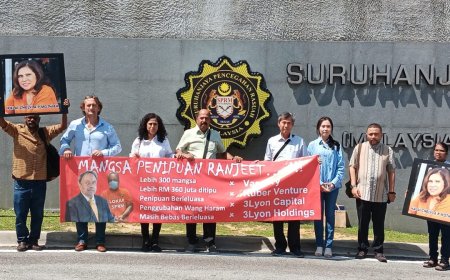
We were told that MaPeR Action Group Malaysia has compiled evidence of over RM300 million defrauded across the Ranjeet network, including a British investor, Lee Rodger Meiklejohn, who lost nearly RM60 million in the earlier G&P Solution Sdn Bhd and Rothchilds Capital (I) Sdn Bhd scam. Multiple victims lodged formal complaints with MACC in October 2025. Yet meaningful action on the Vascory financial statements has been glacial. SSM, the Securities Commission, and the police have had the 2021 accounts for months. The red flags are not subtle. They are screaming. One can't help but question "Is Ranjeet's "kaw-tim" at work here?"
REGULATORY FAILURE AND THE SHIELD OF INFLUENCE
Why has there been no swift prosecution when the company’s own audited accounts prove the layering, the unexplained receivables, the related-party looting, and the personal drawings? The answer lies in the boardroom. Tan Sri and Datuk titles carry weight in Malaysia. Former senior government officials have been named as proxies. Complaints about differential treatment in investigations have already been sent to the MACC chief. The influence works — at least for now.
But influence does not change the law. The Capital Markets and Services Act was breached when unlicensed persons solicited investments in a foreign entity from Malaysian retail investors. The Penal Code sections on cheating (415 & 420) and criminal breach of trust (405–409) are engaged every time investor money was diverted under false pretences. Conspiracy (Section 120A) is obvious from the coordinated booking of entries across related entities. AMLA offences are textbook — layering through a Malaysian company into an offshore shell with no substance. Directors’ duties under the Companies Act were systematically ignored.
The liquidator of Vascory Berhad now has clear grounds for misfeasance proceedings, antecedent transaction claims, and personal claims against directors for undervalue transactions and preferences. The RM193.5 million in “other receivables” and the RM45.78 million related-party exposure did not vanish into thin air. They were moved. The liquidator’s job is to follow the money and make the directors account for every ringgit.
THIS IS NOT OVER — AND VICTIMS MUST ACT NOW
Ranjeet Singh Sidhu is bankrupt. His companies are in liquidation or judicial management. But the victims are still waiting. The 2021 audited financial statements of Vascory Berhad remain the most powerful piece of evidence any victim or authority could ask for. They were prepared and signed by the company’s own auditors. They were filed with SSM. They cannot be wished away.
Every victim who invested in Vascory Limited (Seychelles) through Vascory Berhad has been cheated. Every ringgit that went into those Malaysian bank accounts and was then booked as receivables to the empty shell is recoverable in law — from the directors personally if necessary. The Japanese case from years earlier proves this was not a mistake. It was Ranjeet’s and Hirofumi’s established method of operation.
The authorities have the documents. The liquidator has the powers. The victims have the numbers and the pain. What is missing is relentless pressure. File fresh police reports attaching the 2021 accounts. Write to the liquidator demanding immediate investigation of the related-party balances and director loans. Push MACC to treat the false accounting and layering as the corruption and money laundering offences they clearly are. Demand that SSM explain why no action was taken on the missing subsequent financial statements. Support any application to lift the corporate veil in ongoing proceedings.
Ranjeet Singh Sidhu and his board used Malaysia’s corporate system, its respected names, and its banks to launder and steal from its own citizens. The audited numbers do not lie. The Seychelles shell was never a business. It was a trap. The Malaysian company was never the real investment vehicle. It was the laundry.
The victims of the Vascory Group scam have waited long enough. The evidence is sitting in black and white in the 2021 financial statements. It is time to use it — in court, in the media, and in every corridor of power — until every ringgit is accounted for and every person responsible faces the consequences they have so far avoided.
This scam thrived on silence and influence. It ends when victims and honest Malaysians refuse to stay silent any longer. The numbers are there. The pattern is clear. The time for action is now.